Lower your risk of falling.
As we get older, our muscles can get weaker. This is called sarcopenia. Doing strength activities often can help keep your muscles strong, improve balance, and lower the chance of getting injured. These activities also make everyday things easier, like getting up from a chair, going up stairs, and carrying groceries.
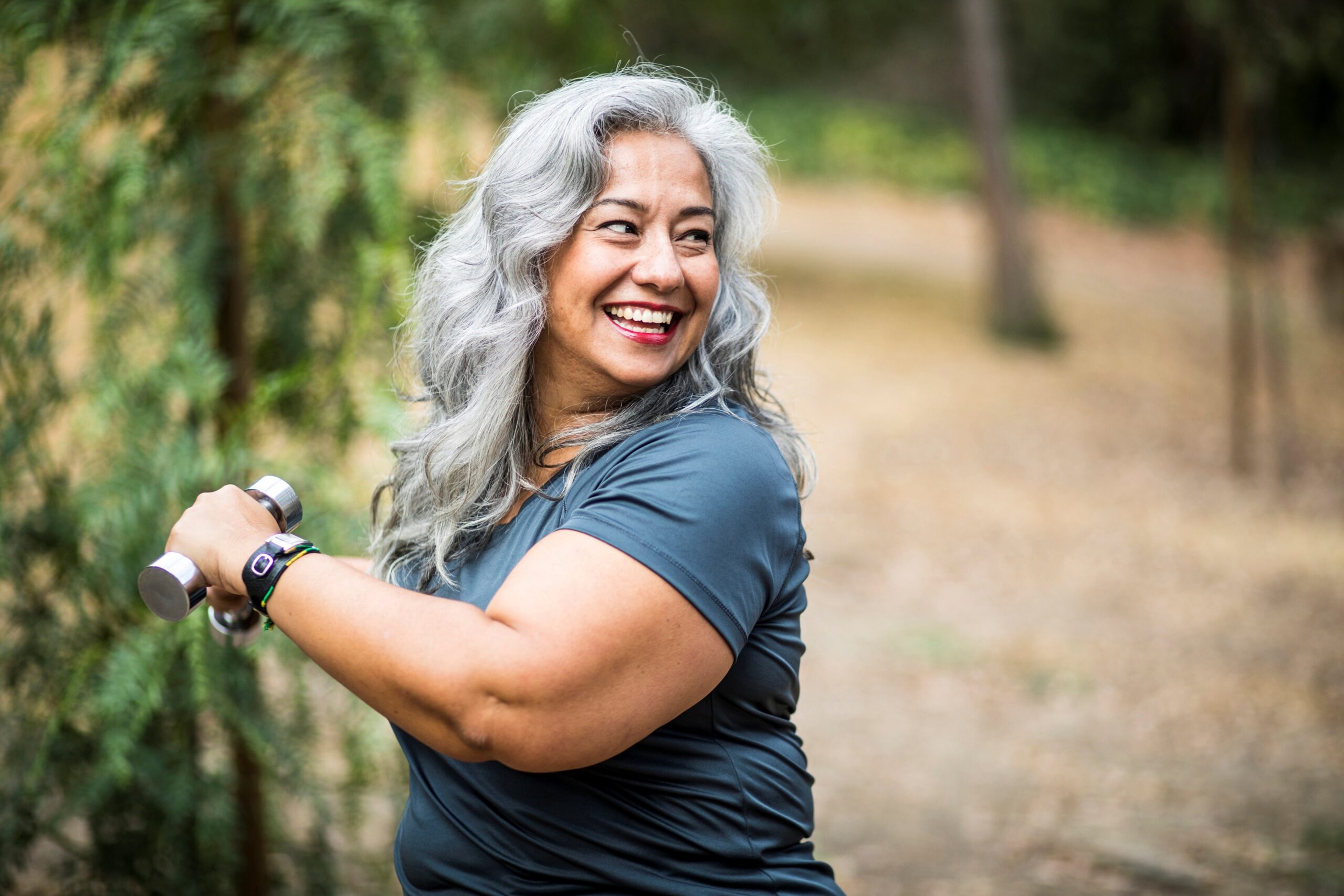
Getting Started: Improve your strength and balance
- The Canadian 24-Hour Movement Guidelines recommends that all adults do strength activities for all major muscle groups at least twice a week.
- The 24-Hour Movement Guidelines also recommend adults 65 and older do activities that challenge balance.
- Doing short activities daily that challenge balance is recommended for adults who are at high risk for falls.
- The 2022 World Guidelines for Falls Prevention and Management for Older Adults recommend working on balance for functional tasks needed to support similar movements in daily life.
- Such activities include sit-to-stand, squats, reaching which standing, standing with a narrower base of support, stepping and walking in different directions, speeds, environments and while dual tasking. Weights can be added to some activities to increase difficulty.
- Activities like yoga, tai chi, and dance are great for balance.
- For building strength, try activities like chair squats, wall push-ups, seated leg lifts, bicep curls, and calf raises.
- Strong hands and wrists help your grip strength so you can open jars, stand up from a chair, and hold things safely.
- It is recommended that older adults engage in at least 40% of time doing activities that challenge balance.
A physiotherapist or athletic therapist can help you create a safe routine.
- If you are not already exercising regularly or are looking to start a new activity, ask your health care provider, physiotherapist, or athletic therapist about how to start safely.
Community-dwelling adults:
- Older adults at low risk for falls who should be offered education about falls prevention and exercise for general health and/or fall prevention if interested.
- Older adults at intermediate risk for falls, should be offered targeted exercise or a physiotherapist referral in order to improve balance and muscle strength, and reduce their fall risk.
- Older adults at high risk for falls who should be offered a multifactorial falls risk assessment to inform individualized tailored interventions.
Take a look at strength and balance activities you can do at home.