In the eyes of Indigenous health professionals
Medication safety requires more than clinical adjustments—it requires reconciliation. This includes valuing traditional medicines, rebuilding trust, addressing racism, and creating culturally safe spaces where Indigenous knowledge is respected and recognized as essential.
Honouring Indigenous wisdom
Across many Indigenous communities, healing has always been holistic—rooted in relationships, culture, and deep connections to land and spirit. A recent sharing circle hosted in Alberta, Canada, centering on Medication Safety & Appropriateness: In the Eyes of Indigenous Health Professionals, brought together Indigenous community members, Elders, healers, pharmacists, and other healthcare professionals to reflect on what safe, respectful, and meaningful medication use truly looks like.
What was shared is powerful.
Canadians cannot improve medication safety without honouring Indigenous knowledge, rebuilding trust, and creating space for whole-person healing.
Summary of key themes
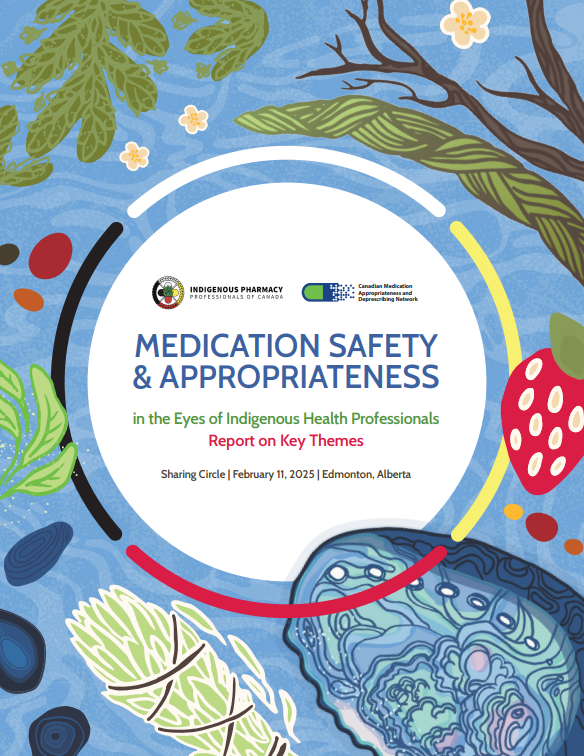
The report provides a public-friendly summary of key themes related to Indigenous Peoples’ experiences with healthcare and medication use in Canada.
It highlights four central themes:
- Incorporating and valuing traditional medicines:
Traditional medicines support mental, emotional, physical, and spiritual wellbeing. They include plant medicines, language, culture, food, land connection, and ceremony. While Western medicines are helpful, they often address symptoms rather than root causes such as racism, colonialism, and lack of access to healthy food or clean water. There is a need for healthcare professionals to better understand traditional medicines and to engage in open, respectful conversations with clients about their use. - Building relationships between healthcare professionals and Indigenous peoples:
Strong, trust-based relationships are essential for effective care. Time constraints, racism, and differing worldviews create barriers to building meaningful relationships. Indigenous clients may require more time to build trust due to historical and ongoing harms. Healthcare professionals must slow down, create culturally safe spaces, and acknowledge the history of colonization to rebuild trust. - Gaps in medication use and communication:
Indigenous clients often experience disruptions in medication access due to communication gaps, rotating physicians, limited follow-up, and transportation barriers. More education is needed for clients about side effects, alternatives, and medication changes. Overprescribing is a concern, especially for Elders. Better coordination between hospitals, pharmacies, and primary care providers is necessary. - Equitable and values‑based access to care and medicines:
Indigenous Peoples face inconsistent coverage for medications, geographic barriers, and challenges in accessing culturally appropriate care. Decisions about medications should reflect client values, local priorities, and the importance of keeping people in their communities. Innovations such as Indigenous care liaisons, virtual care, and drone delivery to remote areas can support better access.
Overall, the report emphasized the need to rebuild relationships, slow down healthcare interactions, integrate traditional medicines, enhance communication tools, and address systemic racism across the healthcare system.
Authorship
This report was authored by the participants of the Sharing Circle, whose stories, experiences, and teachings form its foundation:
- Elder Andy Auigbelle
- Turner Berreth
- Samantha Cross
- Robin Guyer
- Tamara Hansen
- Alexa Harvey
- Kalbie Hokanson
- Raymond Labelle
- Amy Lamb
- Angela Larman
- Katelynn Malo
- Cindy Myo
- Angela Parisian
- Sadie Quintal
- Amber Ruben, and
- Monica Whyte
Reference:
- This report was published in November 2025 and is available on the Canadian Medication Appropriateness and Deprescribing Network website.
National Poison Prevention Week is an annual campaign that runs from March 15 to 21, 2026, in order to raise public awareness of poisoning injuries in Canada. This year the national campaign encourages people in Canada to #RethinkPoisons and use over-the-counter medications and natural health products safely. Medication safety is also an effective fall prevention intervention (particularly deprescribing).