Lower your risk of falling. Do activities that improve strength and balance.
As we get older, our muscles can get weaker. This is called sarcopenia. Doing strength activities often can help keep your muscles strong, improve balance, and lower the chance of getting injured. These activities also make everyday things easier, like getting up from a chair, going up stairs, and carrying groceries.
Be Active
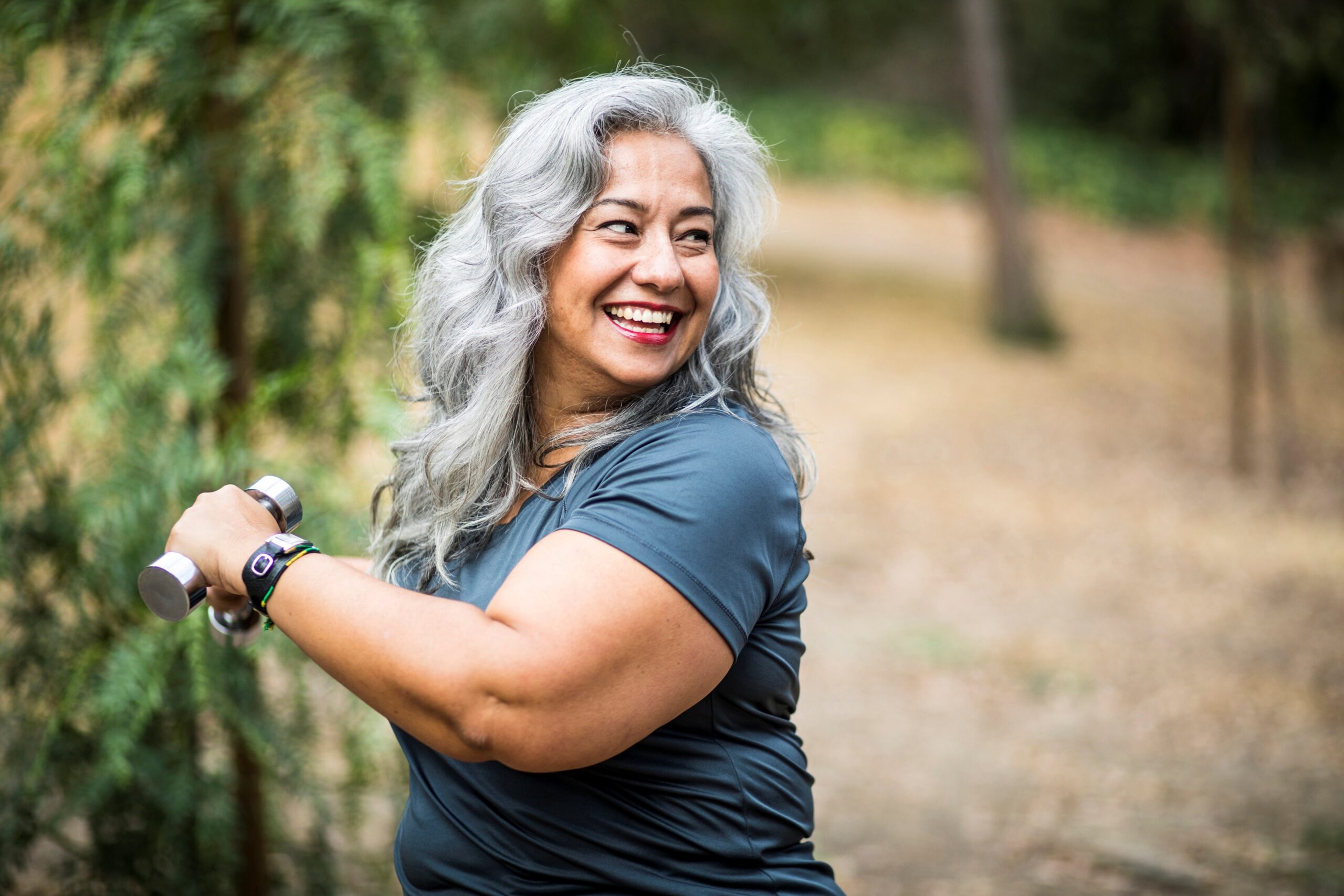
All movement is good for your health. Choose activities you enjoy, like walking, swimming, or cycling. These help your heart and lungs and can be fun with others.
- Where possible and safe, older adults should aim to participate in 2.5 hours-5 hours per week of intermediate-intensity physical activity or 1.15 hours-2.5 hours per week of vigorous-intensity physical activity (World Guidelines for Falls Prevention and Management for Older Adults, 2022).
- Start slow and increase your time and effort as you feel stronger.
- Regular physical activity can also improve mood, sleep, energy, and memory.
- It is recommended that older adults engage in at least 40% of time doing physical activities that challenge balance.
Getting Started: Strength and Balance
- The Canadian 24-Hour Movement Guidelines recommends that all adults do strength activities for all major muscle groups at least twice a week.
- The 24-Hour Movement Guidelines also recommend adults 65 and older do activities that challenge balance.
- Doing short activities daily that challenge balance is recommended for adults who are at high risk for falls.
- The 2022 World Guidelines for Falls Prevention and Management for Older Adults recommend working on balance for functional tasks needed to support similar movements in daily life.
- Such activities include sit-to-stand, squats, reaching which standing, standing with a narrower base of support, stepping and walking in different directions, speeds, environments and while dual tasking. Weights can be added to some activities to increase difficulty.
- Activities like yoga, tai chi, and dance are great for balance.
- For building strength, try activities like chair squats, wall push-ups, seated leg lifts, bicep curls, and calf raises.
- Strong hands and wrists help your grip strength so you can open jars, stand up from a chair, and hold things safely.
A physiotherapist or athletic therapist can help you create a safe routine.
- If you are not already exercising regularly or are looking to start a new activity, ask your health care provider, physiotherapist, or athletic therapist about how to start safely.
Community-dwelling adults:
- Older adults at low risk for falls who should be offered education about falls prevention and exercise for general health and/or fall prevention if interested.
- Older adults at intermediate risk for falls, should be offered targeted exercise or a physiotherapist referral in order to improve balance and muscle strength, and reduce their fall risk.
- Older adults at high risk for falls who should be offered a multifactorial falls risk assessment to inform individualized tailored interventions.
Strength and balance activities to do at home
There are three different levels of activities you can do at home to improve your body strength and balance. These exercises promote upper and lower body strength and safeguard against falls and fall-related injuries to the head, neck, and spinal cord. Start slowly and work up to doing these activities 2 to 3 times a week.
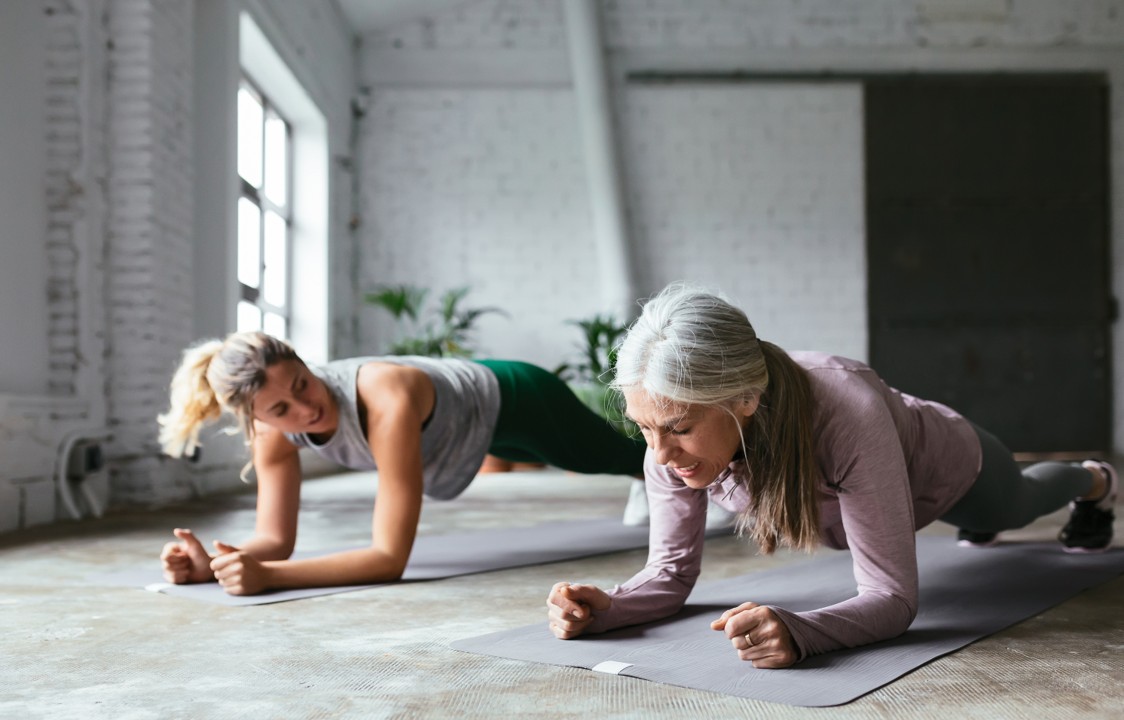
When you are starting an exercise program remember to:
1. Start slowly.
Start with a few repetitions of one or two exercises at a time, and gradually increase how much are you doing. Once you can do the exercises easily and comfortably, you can start to increase the difficulty.
2. Use support.
Rest your hands on a counter top or sturdy table for support. You can gradually decrease the amount of support through your hands by only using your finger tips or by hovering your hands over the support surface.
3. Wear appropriate footwear.
Wear shoes that fit well and provide good support outdoors and indoors. Running shoes are a good choice. Do not wear just slippers or socks in your home.
4. Listen to your body.
Only do the exercises you feel safe and comfortable doing. If any exercise causes you to feel increased pain, short of breath or so unsteady that you could fall, stop that exercise and talk to your doctor.
5. Talk to your doctor about symptoms that may affect your balance.
If you feel dizzy or light-headed, or have blurred vision, ringing in your ears, significant weakness in your legs, or tingling or numbness in your feet, talk to your doctor before you start exercising.
Strength and Balance for Life (STABL)
Strength and Balance for Life (STABL) is a set of activity resources developed by the British Columbia Research and Injury Prevention Unit that support the wellbeing and independence of older adults by reducing the risk of falling. They include:
- Strength and balance activities with videos and instructions
- Goal setting information
- Tracking sheet to record progress
Strength and balance activities with videos and instructions
Level 1: Sitting
Learn 7 activities that start with sitting tall in your chair.
You can also find the translated version of this video in Chinese (Simplified), Farsi, French, Korean, Punjabi, Spanish and Vietnamese.
Level 2: Standing
Learn 7 activities that start with standing tall with both hands on a counter for support.
You can also find the translated version of this video in Chinese (Simplified), Farsi, French, Korean, Punjabi, Spanish and Vietnamese.
Level 3: Moving
Learn 7 activities that start with standing tall beside a counter.
You can also find the translated version of this video in Chinese (Simplified), Farsi, French, Korean, Punjabi, Spanish and Vietnamese.
Printable fall prevention resources
Download the full package of STABL resources which include:
- Staying Independent Checklist
- Home Safety Checklist
- Strength and Balance for Life (STABL) Overview Handout
- STABL Goal Setting Worksheet
- Activity instructions for STABL levels 1, 2 and 3
- STABL Tracking Sheets
Reference
